

Nobody can make ChatGPT, Perplexity or Google AI Overviews recommend a business on demand. What helps is accurate details everywhere, service pages built from real jobs, and honest reviews and mentions on sites you don't own. Then you check the real answers, platform by platform, because no single AI ranking trick exists.
The short version
- No single trick exists. Google says AI Overviews and AI Mode have no additional technical requirements beyond indexing and snippet eligibility, and ChatGPT and Perplexity each run their own crawler. GOOGLE DOCUMENTED
- Check the door first. A blocked search crawler, or a firewall that turns it away, can keep you out of that service's results. OPENAI DOCUMENTED
- Make the facts match. One name, one phone number, the same services and areas on your site, your profile and your listings. DHM INTERPRETATION
- Show the work. Service pages that name the job, the area, the process and real photos from real jobs. DHM INTERPRETATION
- Get confirmed elsewhere. Honest reviews, trade listings and mentions rank high in expert surveys for AI visibility. INDEPENDENT RESEARCH
- Test real prompts. Save the answers, and count mentions, citations and leads as three different things. DHM INTERPRETATION
What a homeowner asks at 9 p.m.
A pipe has burst under the kitchen sink. The homeowner doesn't scroll through ten links. They ask an assistant, "Who's a good emergency plumber near me?", and call the first company that sounds credible. Whether yours gets named depends on what the assistant can find and confirm about it.
GOOGLE DOCUMENTEDBehind that one question, Google says AI Overviews and AI Mode may run several related searches at once, a technique it calls query fan-out. One of those searches can find your business and another can miss it. That's a reason to cover each real service you offer on its own page, and to keep your details the same wherever a search might land.
Has Digital Handshake Media put a home-service business into AI answers?
DHM DATANot with evidence we can publish. We don't have a public, client-approved example of a home-service business named in ChatGPT, Perplexity or Google AI Overviews, so we don't claim one.
Our published case study is a San Diego criminal defence attorney, not a home-service company. It measures Google Business Profile activity from February to April 2026, not AI citations. The figures show what profile and prominence work can do on the map. They don't show an AI answer.
- 271 Business Profile interactions across the three-month window DHM DATA
- 166 direction requests, from a near-standing start in February DHM DATA
- 42 calls placed from the profile, with April the strongest month DHM DATA
The nearest thing we have for home-service work is the completed jobs map. It documents where crews have finished jobs, which supports a service-area claim. That's useful groundwork, and it doesn't prove an assistant will cite you.
What's the biggest misconception about AI recommendations?
GOOGLE DOCUMENTEDThe biggest misconception is that one trick gets you named: a schema type, an AI-specific text file or a special page format. Google says a page needs to be indexed and eligible to show with a snippet to appear in AI Overviews or AI Mode, and that there are no additional technical requirements.
OPENAI DOCUMENTEDPERPLEXITY DOCUMENTEDChatGPT and Perplexity each run their own search crawler with its own rules. Google adds that AI Overviews and AI Mode may use different models and techniques, so the links they show vary. There's no single source list to aim at.
What people try
- Adding a schema type because it sounds technical.
- Publishing a page format built only for machines.
- Hunting for a ranking list shared by every assistant.
What the documentation says
- Google lists no extra technical requirement, and wants structured data to match the visible text.
- Google says its usual SEO fundamentals still apply to AI features.
- Each platform documents its own crawler and its own settings.
DHM INTERPRETATIONFor a local business that's good news. The work that helps in one place mostly helps in the others: accurate details, pages that explain real work and proof from outside your own site. None of it guarantees a mention anywhere.

Is there a home-service example of this working?
AGENCY-REPORTEDOne agency reports one. Astute says a regional electrical, HVAC and plumbing company is now cited across 52 pages in Google AI Overviews, with 137 citation links. The company isn't named and we couldn't verify the figures, so read it as a lead worth studying, not as proof.
According to Astute, the work had four parts, applied to service-by-location pages. Position changes were tracked between March and July 2026.
- Structured data. Location and service markup, so a system could read where and what instead of inferring it from prose.
- Page structure. Each page reorganised to answer one question clearly, under a logical heading order.
- Page content. Rewritten to answer what people ask in specific, quotable form.
- Original photography. Proprietary images in place of stock.
DHM INTERPRETATIONSchema was one of four moves, and Astute's own FAQ says it doesn't force a citation. Astute also says strong traditional rankings are the best predictor of being cited. The lesson is combined work on pages, content and proof, applied to a business with real depth to show.
What mistakes keep home-service businesses out of AI answers?
DHM INTERPRETATIONFive show up most. The first is the only one you can fix in an afternoon.
- Blocking the crawlers by accident. OpenAI says sites that opt out of OAI-SearchBot won't be shown in ChatGPT search answers, and Perplexity recommends allowing PerplexityBot. A firewall or CDN rule can do the same job with no robots.txt line at all. Google makes the same point about its own crawling.
- Conflicting business details. Two phone numbers, three spellings of the company name, a service area that differs between your site and your profile. Each mismatch gives a system a reason to doubt the match.
- Thin, near-identical city pages. Fifty pages that swap one town name make a poor answer to any of the fifty questions.
- Markup that doesn't match the page. Google asks for structured data that matches the visible text. Claims in code that readers can't see on the page work against you.
- Manufactured proof. Bought reviews and planted mentions put your reputation on borrowed evidence, and platforms act against them.
OPENAI DOCUMENTEDIf your robots.txt has a blanket Disallow, or a rule naming these bots, this is the rule that lets the two search crawlers in.
robots.txt
User-agent: OAI-SearchBot
Allow: /

User-agent: PerplexityBot
Allow: /
OPENAI DOCUMENTEDEach OpenAI setting is independent. You can allow OAI-SearchBot for search while disallowing GPTBot, which covers model training. PERPLEXITY DOCUMENTEDPerplexity says PerplexityBot is not used to crawl content for its foundation models, and that Perplexity-User fetches pages when a person asks and generally ignores robots.txt.
How do Google's AI features differ from ChatGPT and Perplexity?
DHM INTERPRETATIONThey differ in who runs the crawler, which settings you control and what each one has documented. The next step for you is different on each.
| Platform | What it documents | Your next step |
|---|---|---|
| Google AI Overviews and AI Mode | A page must be indexed and eligible to show with a snippet. No additional technical requirements. The two features may use different models, so their links vary. | Keep crawling open in robots.txt and at your CDN. Keep your Business Profile current. Match structured data to visible text. |
| ChatGPT search | OAI-SearchBot surfaces sites in ChatGPT search. Opted-out sites won't be shown in answers but can still appear as plain links. GPTBot, for model training, is a separate setting. | Allow OAI-SearchBot and OpenAI's published IP ranges. Decide GPTBot on its own. |
| Perplexity | PerplexityBot surfaces and links sites in Perplexity search and isn't used for foundation-model training. Perplexity-User fetches pages on request. | Allow PerplexityBot and its published IP ranges. Check any firewall rule against both bots. |
What do local SEO experts say matters for AI visibility?
INDEPENDENT RESEARCHWhitespark's 2026 Local Search Ranking Factors survey asked 47 local search experts to score 187 factors across four areas: Local Pack and Maps, local organic, conversion and, new this year, AI search visibility. Presence on best-of lists compiled by experts ranked first for AI search, and three of the top five AI factors were citation factors.
These are expert estimates. Whitespark notes that none of the experts has special access to Google's algorithm, and no assistant has published weights of its own. For a plumber, a best-of list might be a roundup from a local publication or trade body. You can't buy a place on an honest list, so the useful move is earning one: do work worth mentioning and make it easy to find.
What should a home-service business do first?
DHM INTERPRETATIONStart with three things, in this order. Each one is also good local SEO, so the effort isn't wasted if an assistant never names you.
- Make your business facts accurate and readable. Name, phone, hours, categories, services and the areas you really cover, identical on your site, your Business Profile and the major directories. Let the search crawlers in. See why consistent business info matters to AI.
- Show that you fit the question. For each core service, a page that says what work you do, where, how it goes, what affects the quote and what a finished job looks like, with real photos. Our field crew photo workflow shows how to get them without chasing your crews.
- Get confirmed elsewhere. Honest reviews on the platforms your customers use, accurate listings on trade and local directories, and genuine mentions from suppliers and trade associations. Search your own prompts and note which sources the answers cite. Those are your first listings to fix.
INDEPENDENT RESEARCHWhitespark's guidance on AI visibility points the same way: look at where your competitors are being cited and build accurate listings on those sites, and keep your brand facts consistent so both customers and AI systems can understand who you are.
How do you measure AI visibility for a local business?
DHM INTERPRETATIONRun a repeatable test, not a one-off search. Answers change from run to run, so a single result tells you little. Our guide to tracking your AI mention rate goes deeper on the sheet.
- Write 15 to 25 real prompts. Use the words customers use: "emergency plumber near me", "furnace not heating, who do I call in your city".
- Run them on all three platforms. ChatGPT, Perplexity and Google, from the same location each time.
- Repeat on a schedule. Run each prompt several times and again each month.
- Save the evidence. Date, location, exact wording, the businesses named and the pages cited.
- Count three things separately. A mention (you're named), a citation (your page is linked) and a lead (a call, form or direction request you can trace).
- Read the pages that win. When a competitor is named, open the pages cited and note what they show that yours doesn't.
Our guide to counting AI customers covers why flat traffic can hide real leads.
Are some trades easier to get recommended than others?
DHM INTERPRETATIONThere's no reliable public evidence that one trade is easier. What we can say is practical. GOOGLE DOCUMENTEDGoogle says local results rest mainly on relevance, distance and prominence, and that there's no way to request or pay for a better local ranking. Each trade also gets different questions, so the pages and proof that matter differ a little.
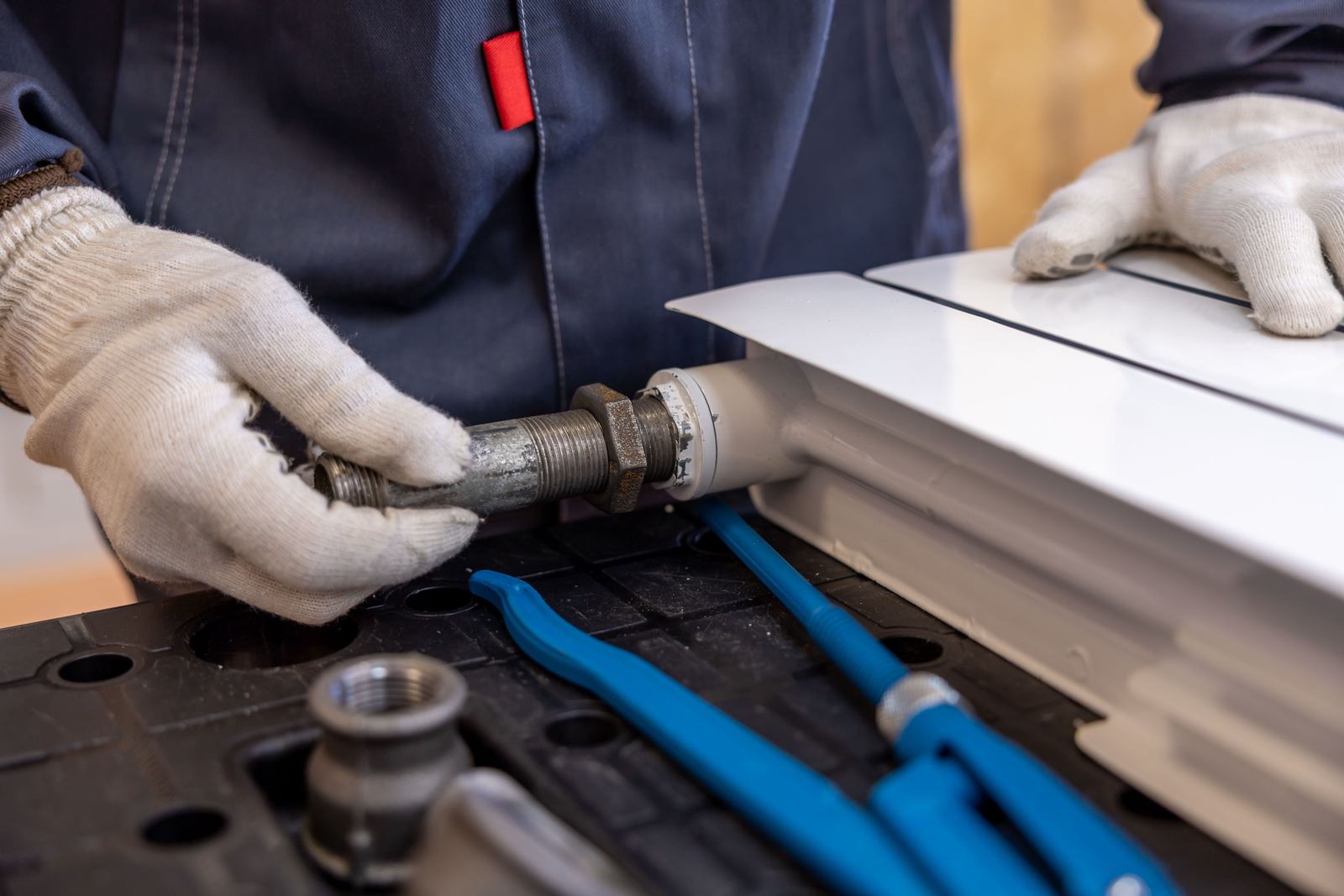
Urgent questions need exact answers.
Emergency prompts ask who's nearby and who's available. State the area you cover and when you answer the phone, and keep it identical everywhere.Read the guide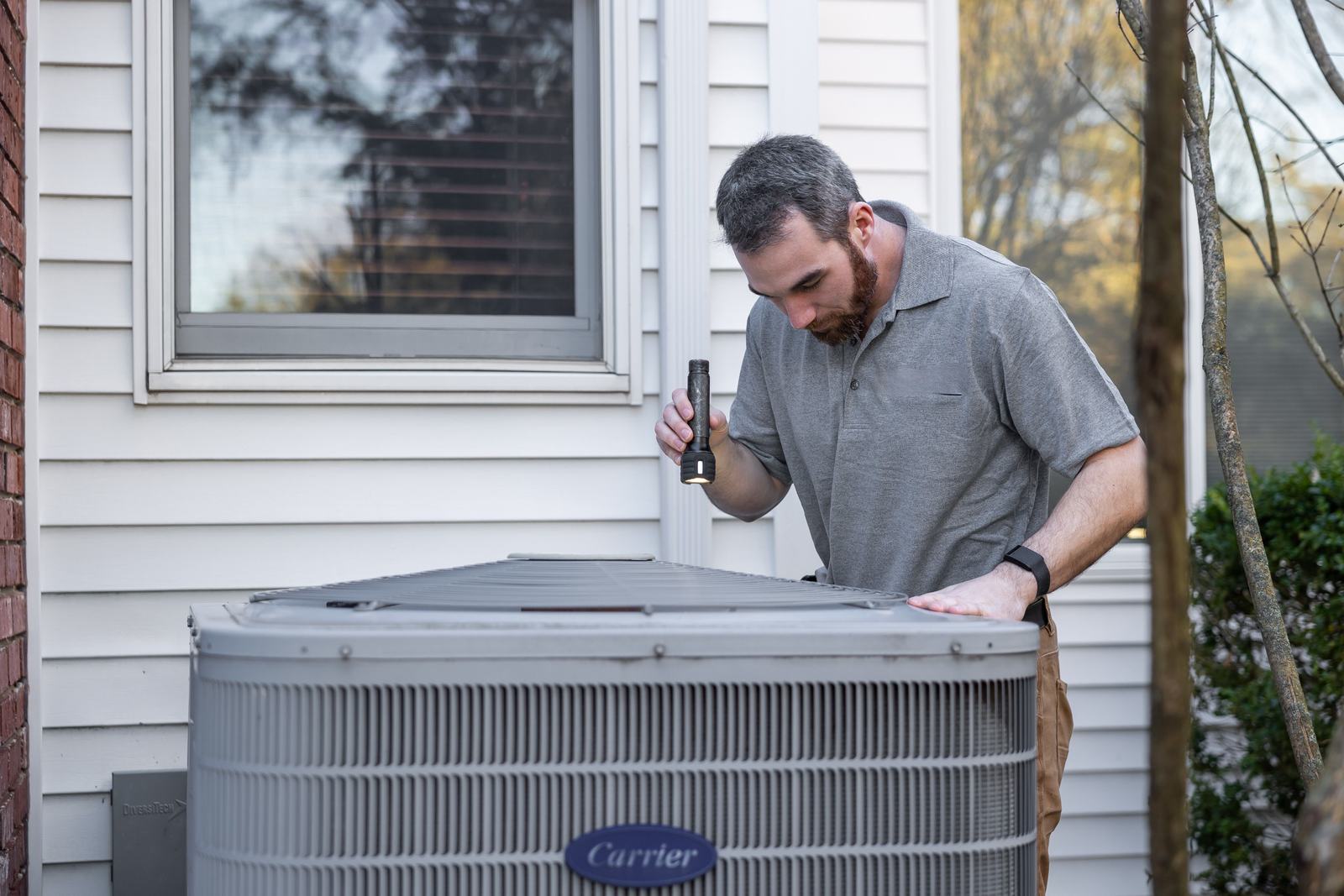
Seasonal demand, repeat questions.
Furnace and cooling prompts spike with the weather. Give each service its own page and keep the facts steady.Read the guide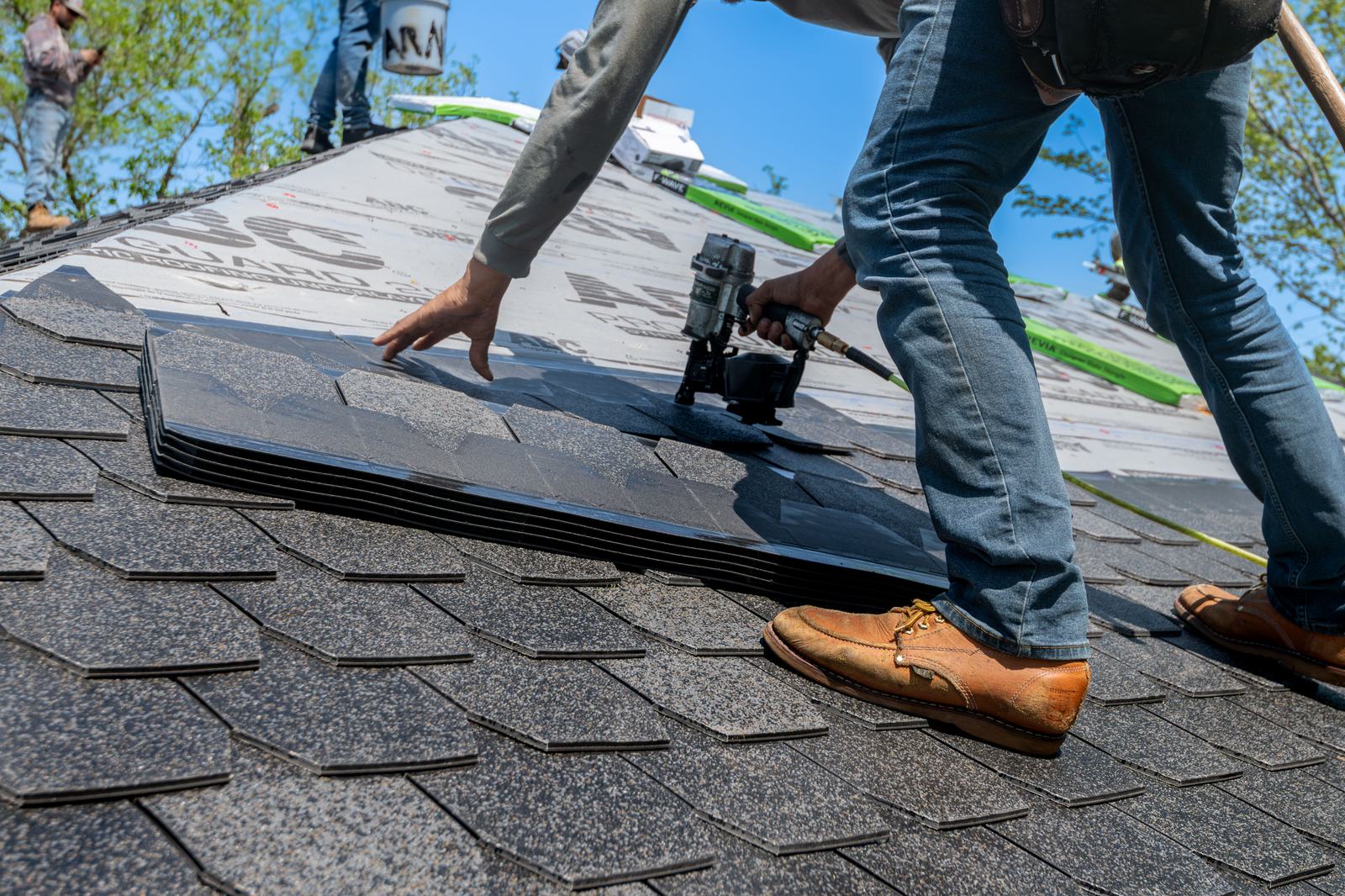
Big jobs get researched.
Show materials, process and finished roofs from real jobs.Read the guide
Trust is part of the question.
Show your licence details where your region requires them.Read the guide


A sensible way to approach AI visibility
Treat it as an extension of local SEO. The same accurate profile, clear service pages and real reviews that help you in Google Maps also give an assistant something to verify. Test the answers monthly, keep your notes and ignore anyone selling a guaranteed placement. We don't guarantee rankings or AI mentions either.
For how we approach this work, see our AI search optimization page. To check the base layer first, run the free Map Pack scan. It measures Maps visibility. It isn't an AI citation report.
Sources
- Google Search Central, AI features and your website (last updated 2025-12-10): eligibility, no additional technical requirements, query fan-out, differing models, structured data matching visible text.
- Google Business Profile Help, Tips to improve your local ranking on Google: relevance, distance and prominence; no way to request or pay for a better local ranking.
- OpenAI, Overview of OpenAI crawlers: OAI-SearchBot, GPTBot and ChatGPT-User, and their independent settings.
- Perplexity, Perplexity crawlers: PerplexityBot, Perplexity-User and firewall guidance.
- Whitespark, Local Search Ranking Factors 2026, and 2026 Playbook: How to Optimize Citations for AI Visibility: 47 experts, 187 factors, and the AI search visibility ranking.
- Astute, How We Improved AI Search Visibility for a Multi-Service Home Services Company: agency-reported results for an unnamed company, not independently verified.
- Digital Handshake Media, case study: Business Profile figures for February to April 2026, read from the client's own profile.
Photos from Pexels: Jakub Zerdzicki, Sergei Starostin, Kathleen Austin Kuhn, Ryan Stephens and Pavel Danilyuk. They're stock images and don't show our clients' work.
Figures are quoted from the sources above, as read on November 20, 2026. They're directional, not exact figures for any one business or market.