

AI search optimization for local business: there is no AI ranking hack, and Google says so.
AI search optimization, also called Answer Engine Optimization (AEO) or Generative Engine Optimization (GEO), sounds like a new discipline with a new rulebook. Google’s own AI-search guide says otherwise. The old foundations of SEO still matter. And several tactics sold under the AEO/GEO label are things Google has said not to bother with. Digital Handshake treats AI search as one more surface the same method covers, not a separate service to sell you.
AI search optimization, also called AEO (Answer Engine Optimization) or GEO (Generative Engine Optimization), means getting a business named or cited inside AI-generated answers, from tools like Google AI Overviews, Perplexity or ChatGPT, not just ranked in a list of links. Google’s AI-search guide, last updated July 2026, is blunt about it. Its AI features are “rooted in” the same core Search ranking and quality systems as everything else. The guide even has a section on what you can stop doing: special AI text files, chopping content into tiny pieces, chasing mentions across the web. What changes for AI search is which existing signals matter more, citation consistency most of all. There is no new ranking system to learn.
By the numbers
- 70% → under 20%: the overlap between top Google links and AI-cited sources, per Brandlight analysis. Ranking #1 no longer predicts being cited. INDEPENDENT RESEARCH
- Its own category: AI search visibility became a separate ranking category in Whitespark’s 2026 survey for the first time. INDEPENDENT RESEARCH
- Same index: Google’s AI features retrieve from the same Search index and quality systems as regular results. GOOGLE DOCUMENTED
- On-page clarity is the one lever rated critical across the Local Pack, local organic and AI search alike. INDEPENDENT RESEARCH
What AEO and GEO actually mean
A search engine returns a ranked list you scan yourself. An answer engine reads the same web, picks a smaller set of sources it trusts, and writes the answer directly. AEO and GEO are the names for optimizing that second kind of result. You want to be one of the businesses an assistant names, not just one of the pages it could have crawled.
The two terms are mostly used to mean the same thing. AEO leans toward answer-style results in general, including Google’s AI Overviews and featured snippets. GEO is the newer term, used more with tools like Perplexity and ChatGPT search. Google’s own guide says both are just names for optimizing the search experience. It is still SEO, not a separate discipline with its own ranking system.
How Google's AI features actually decide what to cite
Google’s guide names two techniques behind AI Overviews and AI Mode. Understanding them explains most of what matters. The first is retrieval-augmented generation, which Google calls grounding. Before writing an answer, the system pulls relevant, current pages from Google’s Search index, using the same core ranking systems that produce regular results. If a page cannot rank well enough to be retrieved, it cannot be grounded on, and cannot be cited.
The second is query fan-out. The model breaks one search into a set of related queries and runs them at once. That pulls in a wider spread of results than a single search would. Then it writes one answer from what comes back. This is why a business can rank fine for its main keyword and still be missing from an AI Overview. The fan-out queries cover the surrounding questions a customer has, and a competitor may answer those better.
Neither one is a separate ranking algorithm. Both run on the same index and quality systems Search has always used. That is the direct evidence behind the claim at the top of this page. If your foundational SEO is weak, AI features have nothing good to retrieve.
The correction
Why we will not sell you a “GEO hack”
A lot of what gets sold as GEO is repackaged SEO advice with a new label and a higher price. Google’s own guide says so. It warns site owners about third-party tools that promise ranking success or claim to use Google’s “internal” AI metrics. No outside tool has that access. Anyone selling a proprietary AI ranking algorithm, or a dashboard that tracks Google’s private AI signals, is selling a story the primary source has already contradicted.
This does not mean AI search behaves exactly like the Map Pack. It does not, as the mechanism above shows. It means the lever is the same one, a clear and verifiable business, pulled harder in a few specific places. Not a different lever.
What Google says you can stop paying for
Google’s guide has a section it calls mythbusting. It is a direct list of tactics site owners do not need. Several of them are standard line items on other agencies’ “AI SEO” invoices right now.

This is the one that surprises people, including us. We still publish one, for reasons explained below. Google is explicit that its own systems do not read these files: “doing so will neither harm nor help your site’s visibility” in Google Search.
Google says its systems already understand multiple topics on one page, and that there is no ideal page length for AI. Content chopped into disconnected snippets for a bot is a worse read for the human it was written for.
No particular sentence structure, keyword density or long-tail phrasing is required. Google’s systems are described as understanding synonyms and general meaning, the same way a person would.
Buying or manufacturing brand mentions on unrelated sites is called out directly as not as helpful as it looks. The same systems that reward genuine authority are built to filter out manipulation.
Structured data is not required specifically for AI features. It stays worth using for traditional rich results as normal SEO, which is a narrower claim than “schema gets you cited by AI.”
Why we still publish an llms.txt file anyway
Google has confirmed it plays no role in Google Search's AI features. We keep one because other AI crawlers - OpenAI's, Anthropic's, Perplexity's - may reference it, and it costs a few lines of plain text to maintain. That is the honest reason, not a claim that it moves a Google ranking, because the primary source says it does not.
Three things the evidence points to
- Citation consistency, more than for normal rankings. Survey data says citation signals matter more for AI search than for the Local Pack. That reverses the old advice that citations were fading. An assistant deciding which businesses to trust leans on the same name-address-phone consistency a directory citation check has always measured.
- Third-party sources, not just your own site. Independent July 2026 testing of Perplexity found it built local answers mostly from third-party sources: directories like Clutch, DesignRush and Yelp, plus Reddit threads. Not from one business’s own page. Being well-covered on the sources an assistant reads matters as much as your website.
- On-page clarity, the one lever that works everywhere. Across the Local Pack, local organic and AI search, on-page signals rate as critical on all three. That means clear structure, correct information, genuinely useful content. Google’s guide says the same in other words: write for the human first. If effort has to go in one place to count everywhere, that is it. The full sourced breakdown →
The honest gap
Ranking #1 does not mean an assistant will cite you
Analysis from the GEO firm Brandlight suggests the overlap between top Google links and AI-cited sources has fallen from about 70% to under 20%. Ranking on page one of Google no longer predicts being cited by an assistant. That is the gap AEO and GEO work is meant to close. It is not a different algorithm to game. It is a wider, more scattered set of sources an assistant checks, most of which a business does not control and has to earn a place on.
How to actually check whether it is working
Google’s guide points to one instrument: the Generative AI performance report in Search Console. It shows impressions and clicks from AI Overviews and AI Mode, separated from regular Search. That is the only source that can say with any authority whether a page is showing inside Google’s AI features. Not a rank tracker guessing at a snapshot. And not a third-party tool claiming a private view into signals Google says it does not expose.

For assistants outside Google, like ChatGPT, Perplexity and Copilot, there is no official console. The honest method is the same one behind the Map Pack Check. Ask the real questions a customer would ask, from a fresh session, and record what comes back. Repeat it on a schedule rather than checking once and assuming it holds.
How this fits the Digital Handshake method
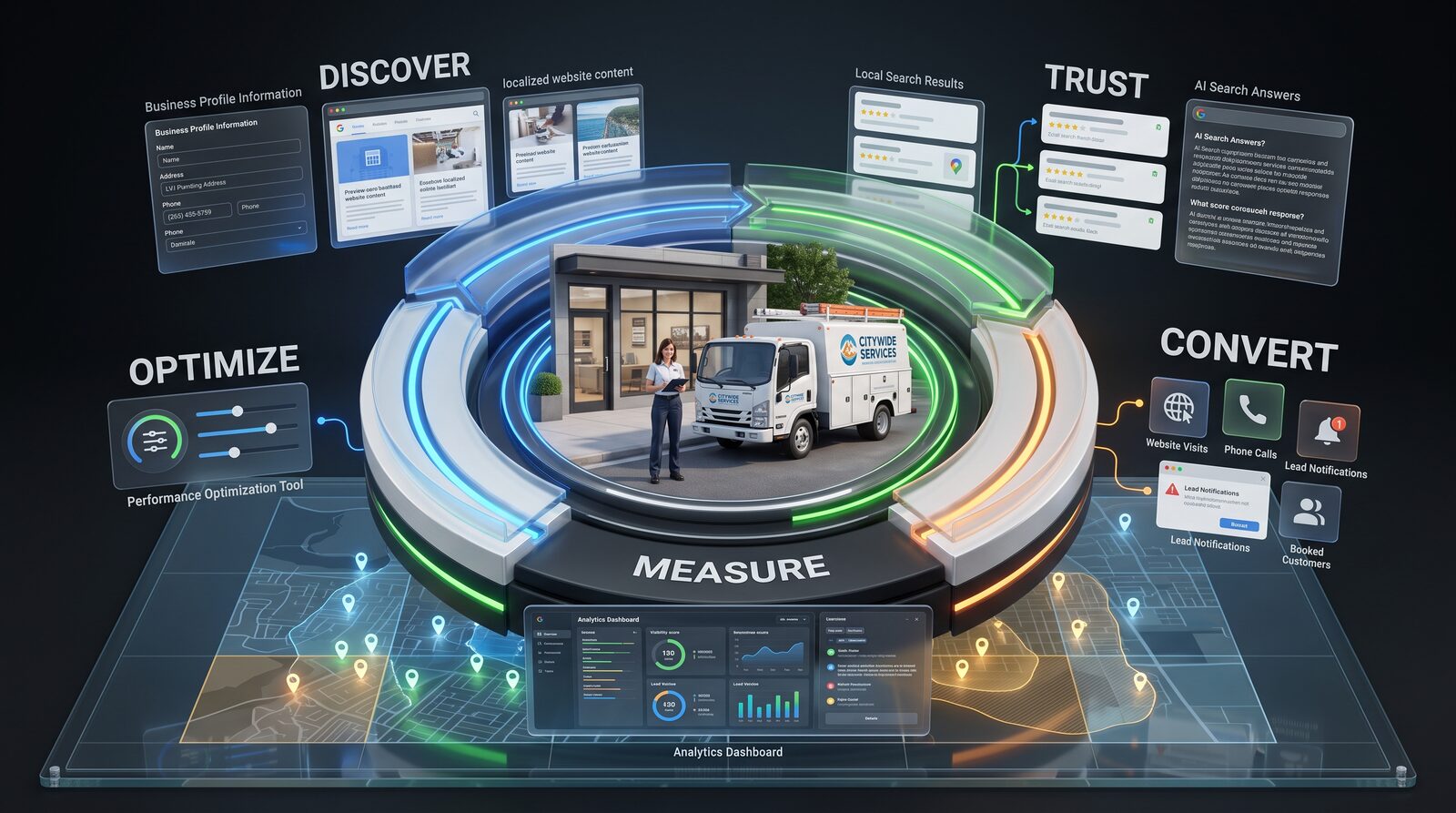
AI search optimization is one of the eight work areas inside the same 12-week roadmap. Not a separate product, and not billed as one.
The baseline scan
Before any work starts, we check the Generative AI performance report where it exists. We also ask the questions your customers ask across the major assistants. So the starting point is recorded, not assumed.
The 12-week roadmap
Citation consistency, entity clarity, on-page content and the third-party sources assistants actually read, worked alongside the rest of the roadmap, not after it.
The re-scan
The same questions and the same report, checked again, so whether an assistant names your business is evidence, not a guess.
Not this
What we will not sell you
No promise of a specific AI citation. No keyword-stuffed content written for a bot instead of a reader. Google’s AI guidance is clear that people-first content is what it rewards, and content written to game an assistant tends to fail both tests at once. No llms.txt file billed as a ranking lever. No schema package billed as an AI-citation requirement. No proprietary “AI algorithm” nobody else can see. The published, verifiable version of this work is the whole pitch. The full list of what we refuse to sell →
What we do instead is make your business easier for AI tools to verify: the same name, address, phone and services across your profile, website and listings, real reviews, and clear service pages. An AI answer is not a ranking. The same question can return a different answer depending on the prompt, the person’s location, the model and the date, so we report what we observe, never a rank. How we measure it →
Frequently asked questions
What is the difference between AEO and GEO?
Mostly terminology. AEO covers answer-style results generally, including Google’s AI Overviews and featured snippets. GEO is the newer term, associated more with tools like Perplexity and ChatGPT search. Google’s own guide treats both as names for the same underlying work: optimizing for the search experience, which is still SEO.
Does Google have a special algorithm for AI search rankings?
No. Google's AI-search optimization guide says its generative features are rooted in the same core Search ranking and quality systems as everything else, retrieved through the same index.
Do I need an llms.txt file to show up in Google's AI Overviews?
No, and Google says so directly: these files play no role in Google Search's generative features. We publish one anyway on the chance other AI crawlers reference it, but not because it affects a Google ranking.
Do I need special schema markup to appear in AI search results?
Not specifically for AI features, according to Google's own guide. Structured data remains worth using for traditional rich results as part of normal SEO, but it is not a documented requirement or lever for AI Overview citation on its own.
Can you guarantee my business gets cited by ChatGPT or Perplexity?
No. Nobody can. The same honesty that applies to Google Maps rankings applies here.
Do I need a separate AI-search service, or does this fit inside local SEO?
It fits inside local SEO. AI search optimization is one of the eight work areas in the same 12-week roadmap, not a separate product.
Are you an AEO agency?
Not as a separate product. There is no AEO retainer, no proprietary AI-ranking dashboard, and no algorithm nobody else can see — the same claims Google's own guide warns you about. AI search visibility is one of the eight work areas inside the standard 12-week local SEO roadmap, priced and delivered as part of it.
Is being #1 on Google enough to get cited by AI assistants?
Not reliably. Research suggests the overlap between top Google results and AI-cited sources has dropped sharply, so page-one rankings no longer predict AI citation on their own.
Is SEO dead because of AI?
No. AI answers are still built from web pages and still link out to them, and Google says the same content and quality rules apply. What stopped working is the tricks: keyword stuffing, thin pages, and bought links. Clear, well-structured pages now serve the blue links, the Map Pack, and the AI answer at once.
Where this page's claims come from
Sources
- Google Search Central, “Optimizing for AI features and your website” (AI-search optimization guide), developers.google.com, last updated July 2026 - retrieval-augmented generation, query fan-out, the mythbusting list, the Generative AI performance report, and third-party tool guidance.
- Whitespark, Local Search Ranking Factors 2026 - AI search as a formal ranking category, citation-signal weighting.
- Brandlight, analysis of overlap between top Google results and AI-cited sources, as reported in industry coverage.
- Independent July 2026 testing of Perplexity local-query citation sources.
Figures are quoted from the published sources above. Where a source reports a range rather than a single value, the range is shown.
Where to go from here
See whether assistants can find you today
The free audit includes a check on whether AI assistants can currently verify what your business does and where.
Or call 778-200-8644 · One client per industry, per area · No guaranteed rankings